
EPISODE 02 · AN ORIGINAL MAKER STORY
Before the First Pour.첫 잔이 놓이기까지.
A cup begins in clay. A tea artisan begins by learning to listen.
A potter becomes a student again. Follow Haein through mistakes, firm corrections and many harvests with Teacher Cha, until she finds her own hands.
PART I · LEARNING THE CUP
A cup takes shape.
A shape begins in the hands
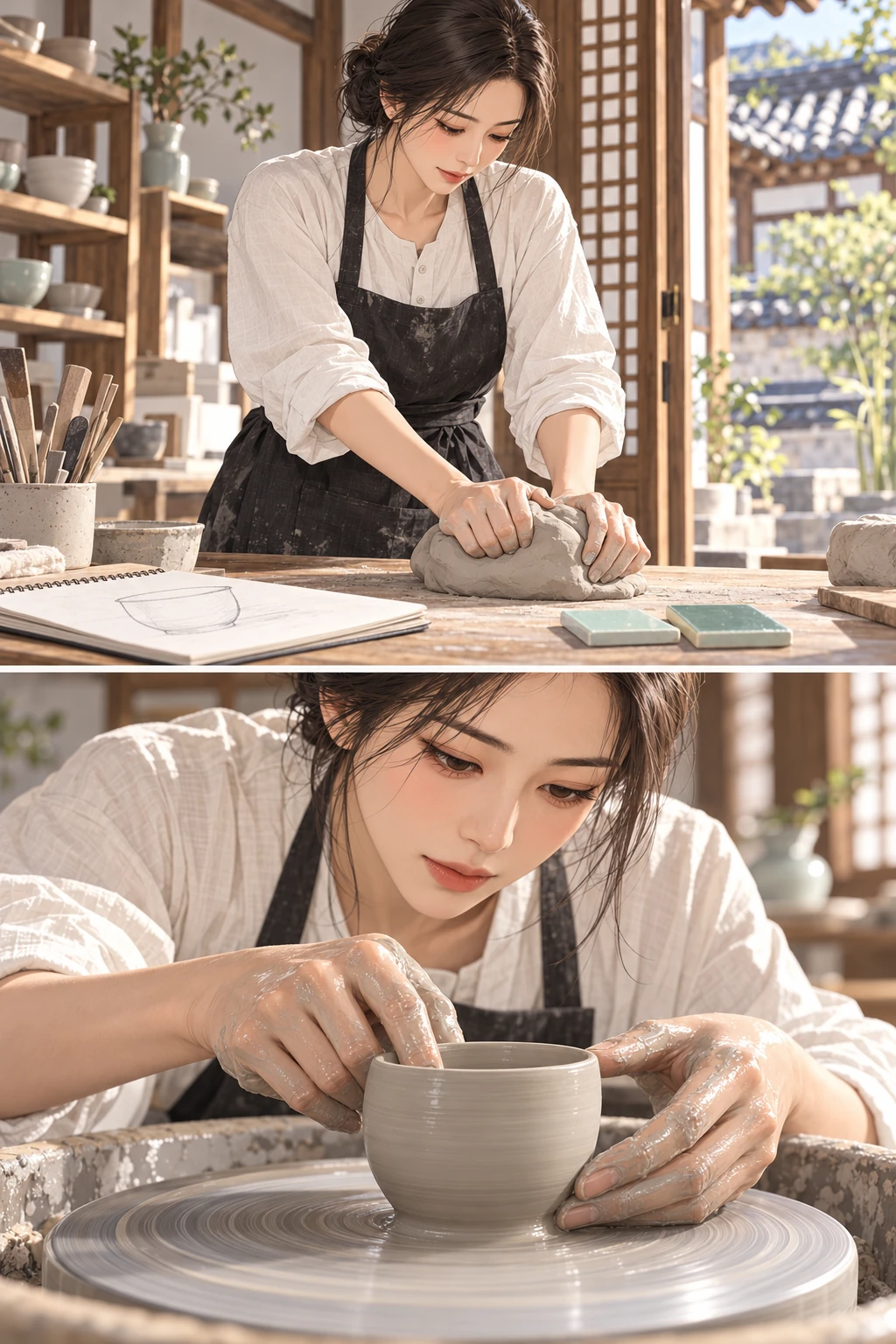
HAEIN / AT THE BENCHBefore it can hold tea, it has to hold its shape.
HAEIN / AT THE WHEELI want the curve to settle into someone’s hands.
Preparing the clay · shaping on the wheel+
The story begins with clay preparation and wheel forming. This is one imagined making route, rather than Charim’s confirmed production method.
The small decisions
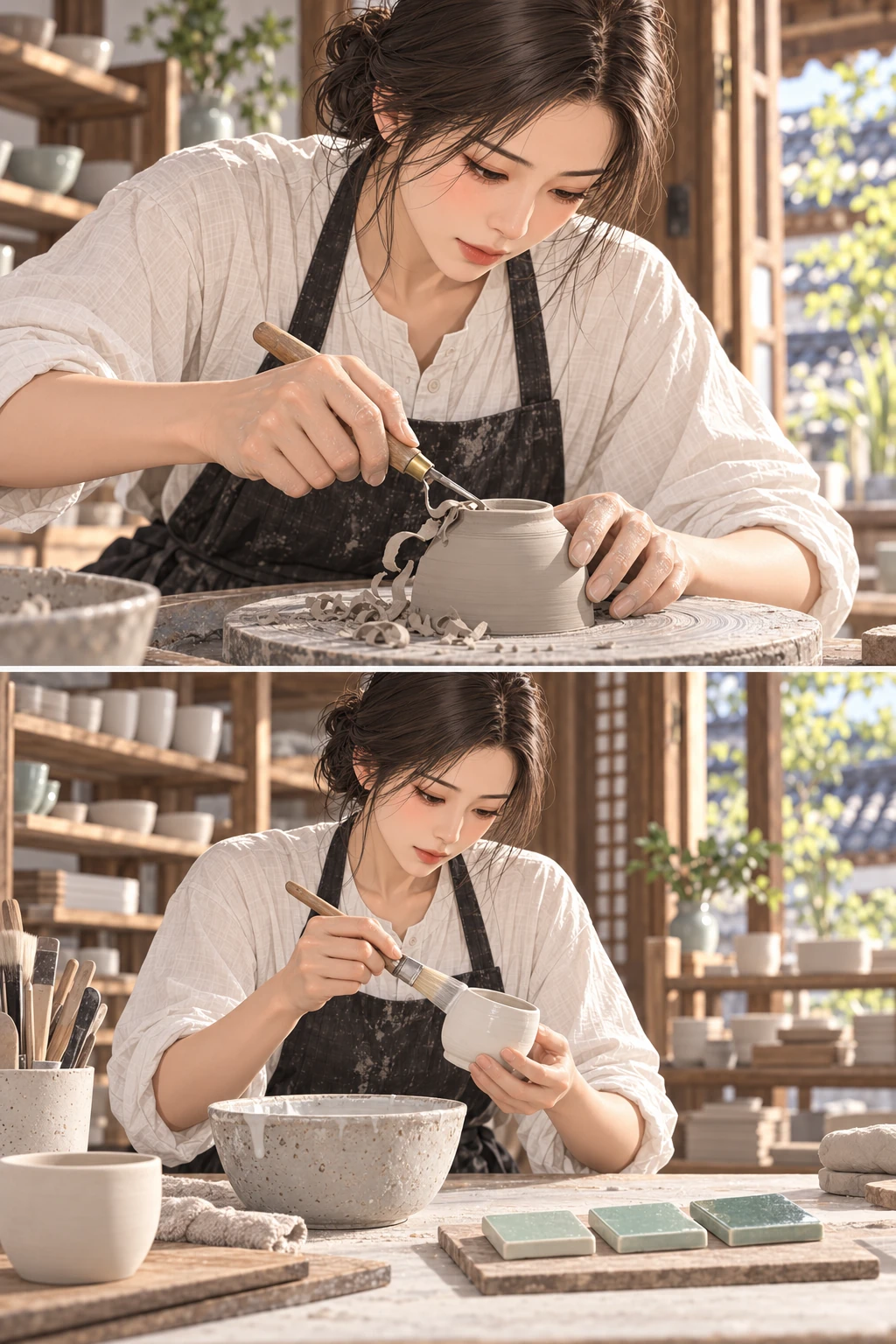
HAEIN / REFINING THE FOOTThe smallest edge is the one someone will feel.
HAEIN / AT THE GLAZE TABLEOne white. One celadon. Different, but made to belong together.
Refining the foot · developing the glaze+
Time passes between these panels: drying and the preparation or firing stages required by the chosen ceramic process happen off-panel. Glaze colors must be judged after firing, not by their unfired appearance.
A cup, ready for a life
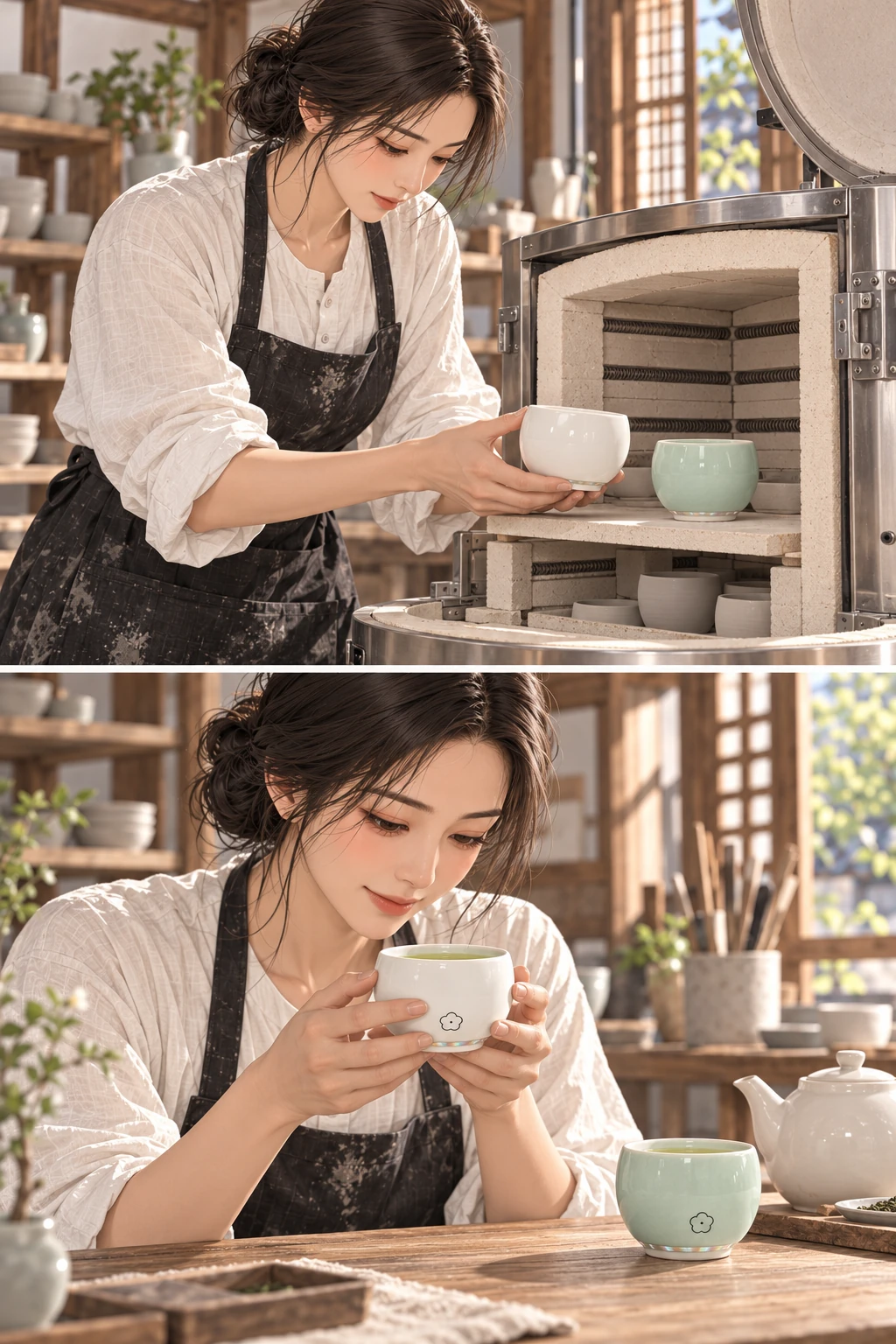
HAEIN / AFTER THE WAITSome things only reveal themselves after you wait.
HAEIN / THE FIRST CUPI made the cup. The moment inside it will be yours.
After the kiln cools · the finished pair+
The kiln is fully cooled before inspection. The final panel jumps forward to the imagined finished pair, after decoration and any further finishing or firing it requires. The flower and pearl-like line remain concept finishes, not a documented manufacturing specification.
PART II · LEARNING THE LEAF
A beginner. Again.
Teacher Cha’s workshop. A sharp word, another attempt, and the years it takes to become an artisan.
The first telling-off
The cup was ready. Haein was a beginner again. In Teacher Cha’s workshop, even a small batch asked more of her than she expected.
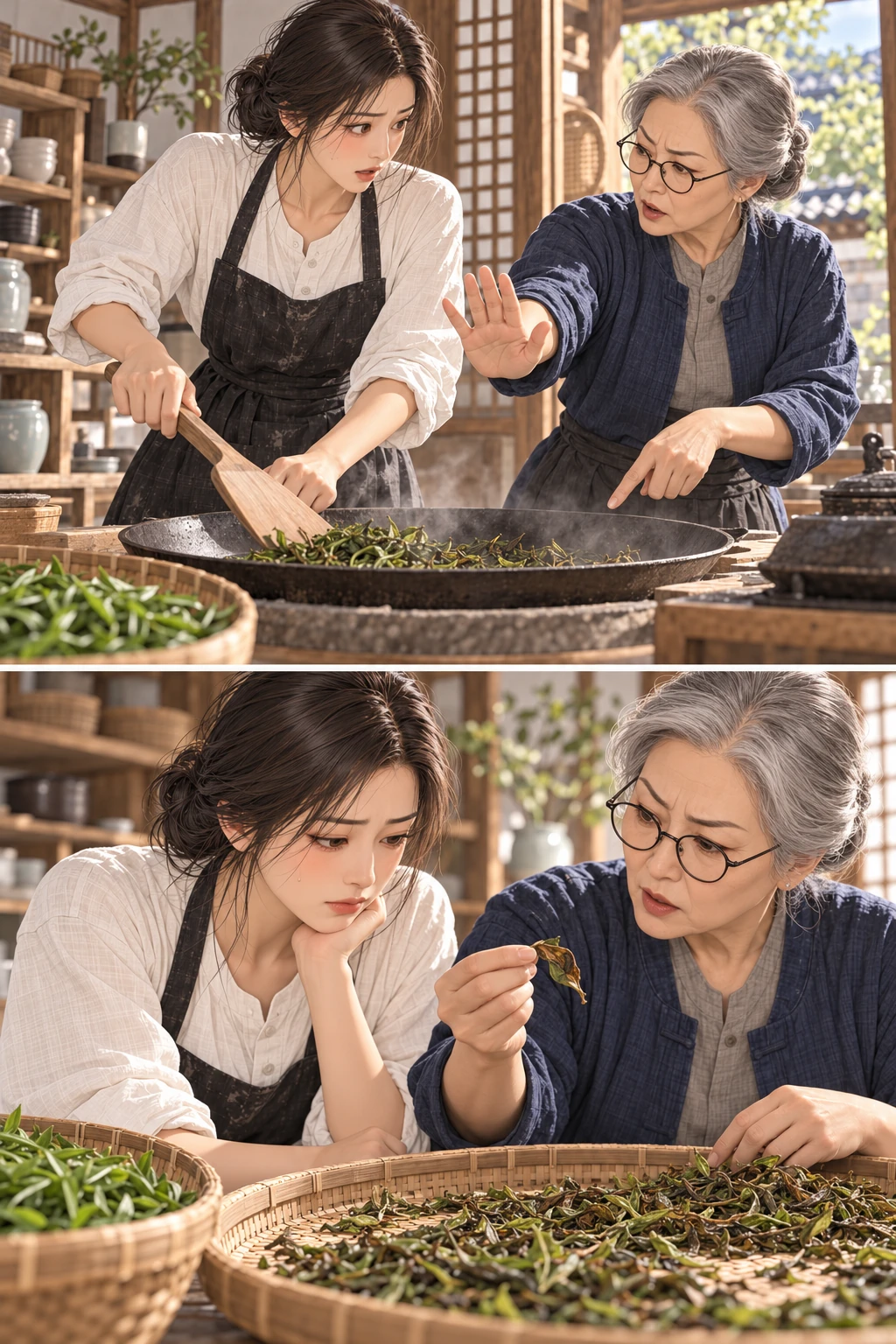
TEACHER CHAToo fast. Look at the leaves.
HAEINI thought I was doing it right…
TEACHER CHAThe clock cannot see what the leaves need.
HAEIN…I’ll start again.
A rushed batch · beginning again+
A fictional first lesson in processing tea leaves. The rejected batch and correction create the story’s turning point; they are not a temperature, timing or equipment guide. Different Korean tea-making methods have their own sequences.
Again, and again
She returned for the next harvest. And the next. A correction became a question; slowly, her hands began to notice the difference.
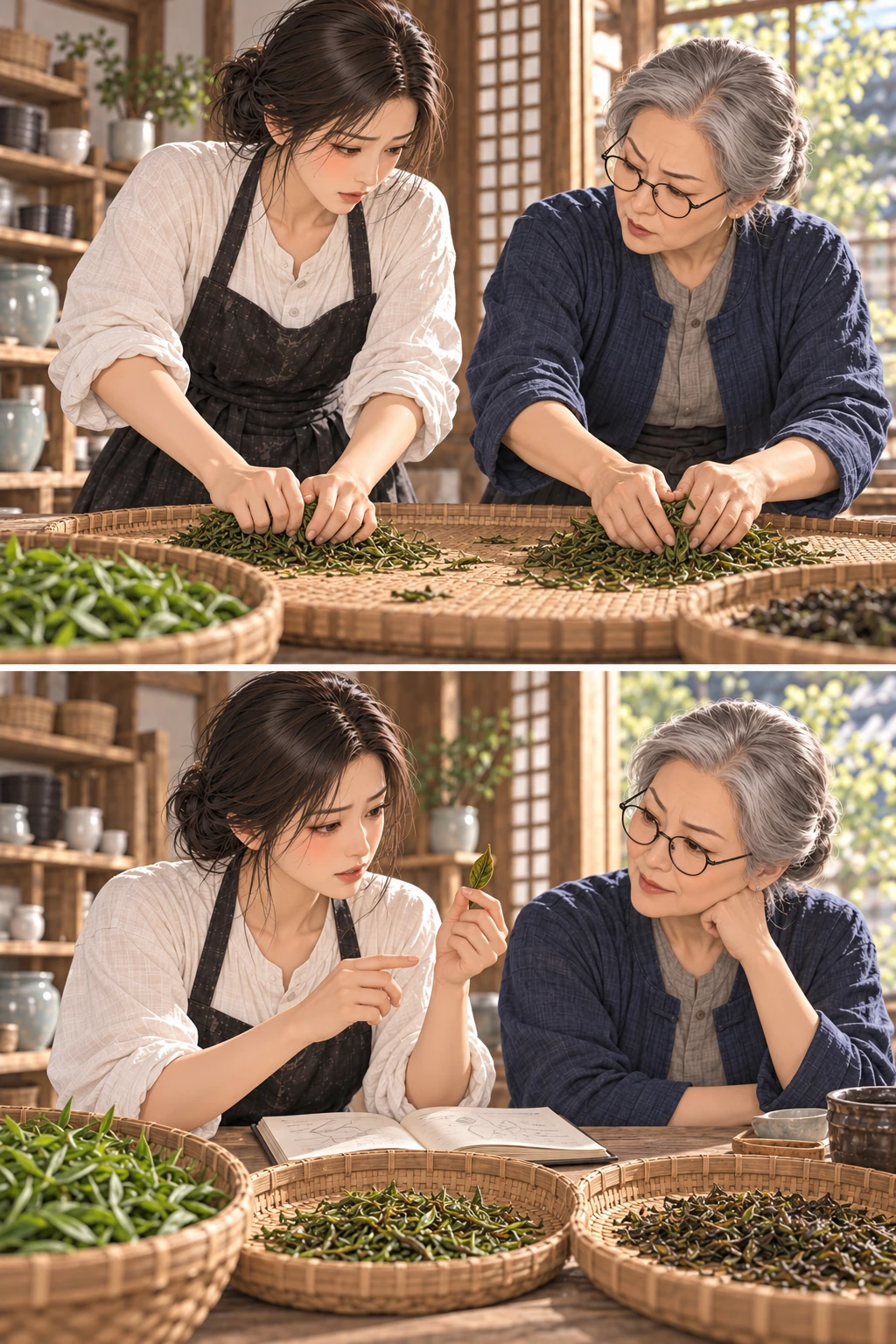
TEACHER CHALess force. Let your hands notice the change.
HAEINLike this?
HAEINToday’s leaves feel different.
TEACHER CHAGood. Tell me what changed.
Learning a gentler touch · noticing the leaf+
These panels move across successive harvests. The rolling scene uses cooled leaves, away from the heated pan. The notebook represents Haein’s own observations in this fictional apprenticeship; it is not a historical manuscript.
Her own hands
Years of practice followed. Now Haein leads her own tea workshop. She finishes a batch herself, and saves the first cup for the teacher who kept asking her to try again.
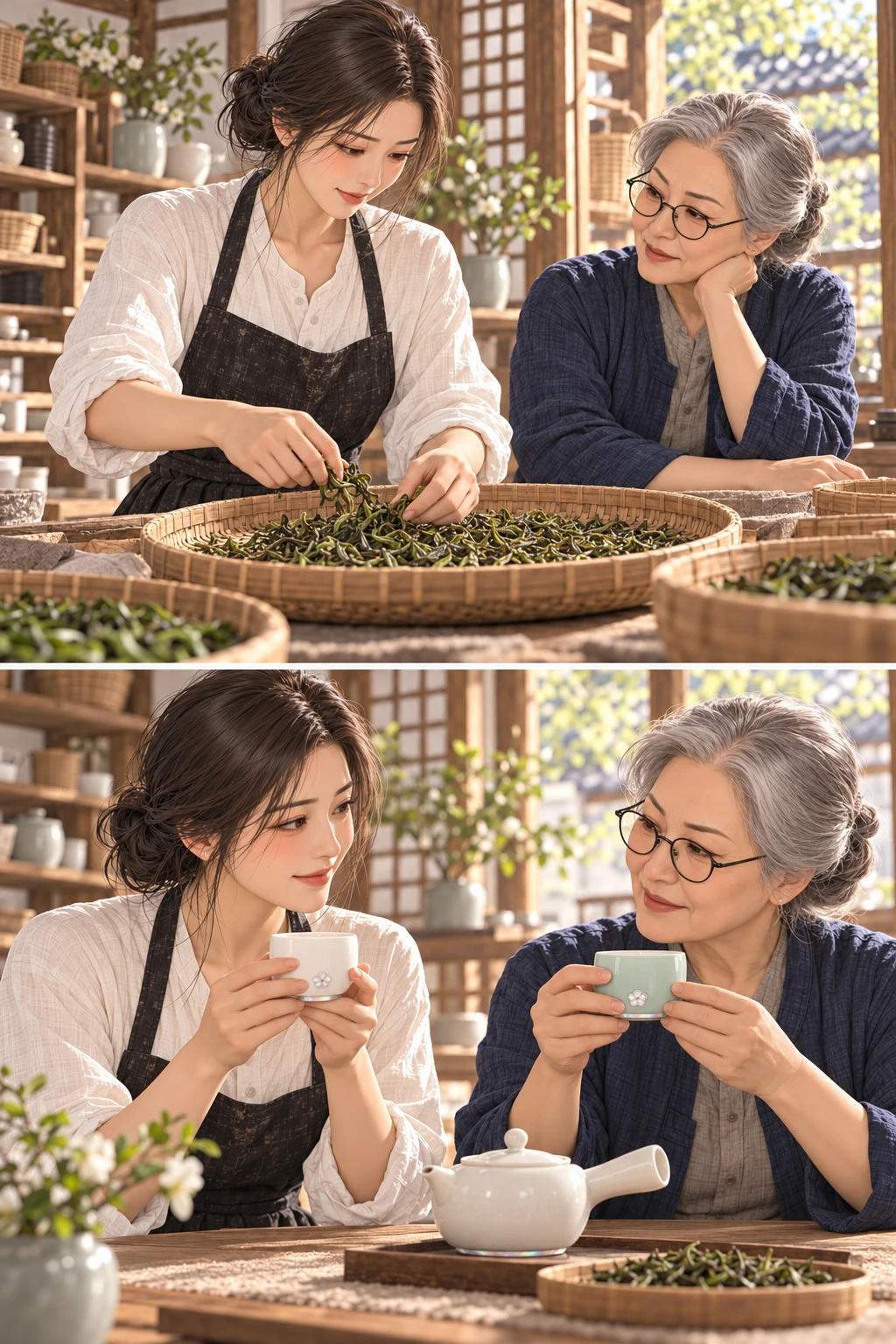
HAEINThe leaf is ready. I can feel it now.
TEACHER CHAThen finish this batch yourself.
TEACHER CHAYou’ve found your own hands.
HAEINAnd I still have so much to learn.
Completing her own batch · sharing with her teacher+
The story jumps forward by years, rather than turning one lesson into instant mastery. Haein’s workshop and Teacher Cha are fictional. “Artisan” describes her character’s journey, not an official heritage title or a claim about a Charim supplier.
THE END · AN ARTISAN KEEPS LEARNING.
An artisan is made by returning.
An original fictional story with generated illustrations. Haein, Teacher Cha and their workshops are invented. The twelve panels move from pottery to a tea apprenticeship across many years. They are a story about becoming an artisan; the featured cups are design concepts and the scenes are not technical production instructions.