See tea in real hands, follow dated archive records, and explore the manuscripts and methods behind Korean tea life. Then make a little room for your own cup.
Korea News No. 1326 records tea-association members learning traditional tea drinking at Bongeunsa. It also introduces a tea exhibition with historical vessels and books. This is evidence of twentieth-century teaching and revival, rather than footage of the Joseon period.
The Haeinsa collection records monks’ activities, including tea practice alongside meditation, calligraphy and communal meals. Open the original gallery to explore the photographs and their catalogue information.
These dated collections open on the official archive. The 1987 photographs carry KOGL Type 4; they are linked here rather than reproduced on our product website.
Older ways of preparing tea+
THE OLDER METHODS · 조선 후기의 차 준비
Before a temperature-controlled kettle.
Historical accounts describe particular people and settings. They do not give us one ceremony followed by everyone.
01 / DASAN CHODANG · FROM 1808
Spring water, a stone hearth.
Jeong Yak-yong drew water from Yakcheon, boiled it at a tea hearth and enjoyed tea on a flat stone, with the landscape around him.
02 / DASINJEON · FAIR COPY, 1830
Learn the water before the pour.
Choui’s copied tea manual treats fire, boiling water, adding leaves, vessels and cup cloths separately. Preparing tea involved learning how to judge these things.
03 / CHOUI’S TEA THOUGHT
Keep the tea and water in balance.
The historical account explains jungjeong as right measure: water, leaf quantity and brewing time should be neither excessive nor insufficient.
English summaries of the cited accounts. Modern brewing temperatures and timings appear in our practical guide below.
THE SURVIVING WORDS · 실제 차 문헌
Tea, in the pages that came before us.
Two historical works. Photographs of real documents, with their sources.
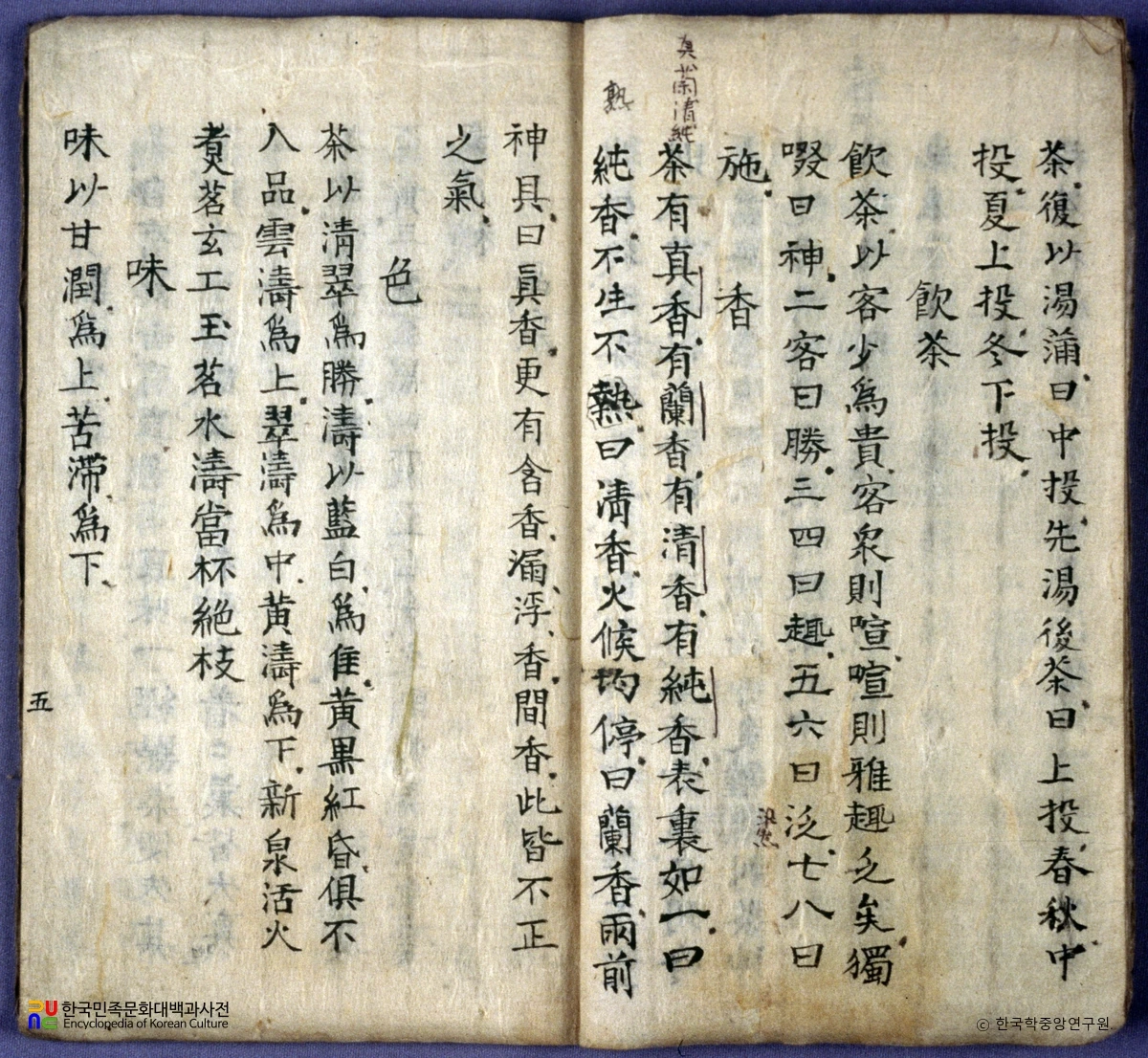
[다신전] 한국민족문화대백과사전 · Academy of Korean Studies · KOGL Type 1
FAIR COPY OF THE TEXT · 1830
Dasinjeon다신전 · 茶神傳
Read the historical context+
Choui Uisun copied and excerpted an earlier Chinese tea text, then prepared a fair copy in 1830. Its 22 sections range from gathering and making tea to water, vessels, fragrance, color and taste. It shows tea knowledge being studied and passed on in late-Joseon Korea.
[동다송] 한국민족문화대백과사전 · Academy of Korean Studies · KOGL Type 1
LATE JOSEON · 19TH-CENTURY WORK
Dongdasong동다송 · 東茶頌
Read the historical context+
Choui’s 31-verse tea work brings poetry and practical attention together: making tea, judging water, preparing a cup and appreciating Korean-grown tea. The Academy of Korean Studies places its composition after 1831 and notes that the exact year is uncertain.
Jeda means turning tea shoots and leaves into tea. Korea’s documented traditions include loose-leaf and compressed tea, with steaming or pan-firing among the methods used. Jeda was designated national intangible heritage on 14 July 2016.
Dasinjeon and Dongdasong record pan-fired tea making. The sequence below is an introduction to one loose-leaf route, not a recipe shared by every Korean tea tradition.
01
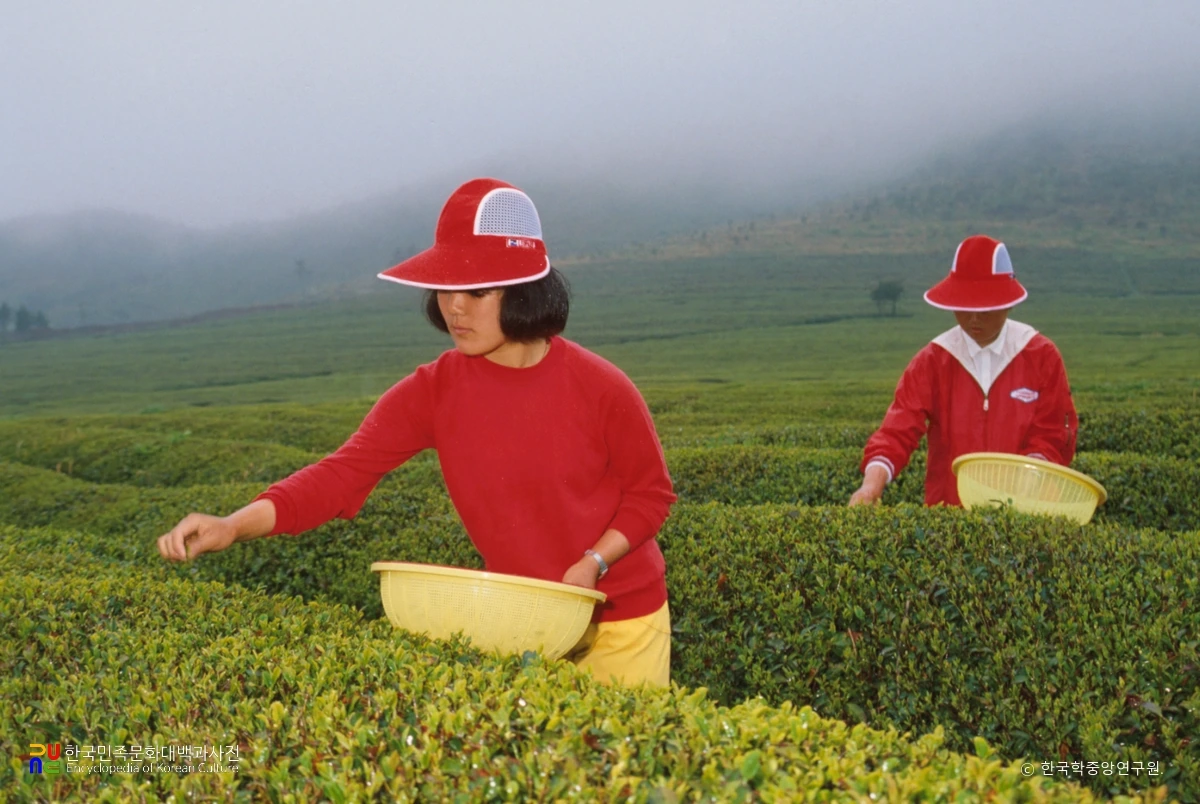
Gather채엽
Pick and select the leaves.
02
Heat덖음
Work the leaves in a heated pan.
03
Roll비비기
Roll or rub the processed leaves.
04
Dry건조
Dry the tea for keeping and later brewing.
Methods and repetitions vary. Other documented routes include steaming leaves and making compressed tea.
Dasinjeon separates attention to the fire, boiling water, adding tea, vessels and cleaning the cup cloth. Fragrance, color and taste each receive their own section. Preparing tea was something to study, as well as enjoy.
Water & heat
Notice what the water is doing before it meets the leaf.
Vessels & cloth
Care for the objects that prepare and hold the tea.
Fragrance · color · taste
Let each sense have a little time.
These are our reading prompts drawn from the text, not a translation of its full instructions. For today’s tea, use the producer’s leaf quantity, water temperature and steeping guidance.
Manuals. Poems. Letters. Different kinds of tea records, with different purposes.
POEMS & A PLACE
Daam Sicheop다암시첩 · 茶盦詩帖
Read the connection+
The National Institute of Korean History discusses Jeong Yak-yong’s tea life through this collection of tea poems. At Dasan Chodang, a spring, a tea hearth and the surrounding landscape became subjects for writing. The record joins tea to a particular place.
When Jeong left Gangjin in 1818, a tea fellowship linked him and his students. Its written rules connected tea sent to him with continued exchange. The National Folk Museum’s 2019 exhibition presented Dasin-gye Jeolmok and related writings, showing the relationships preserved in those documents.
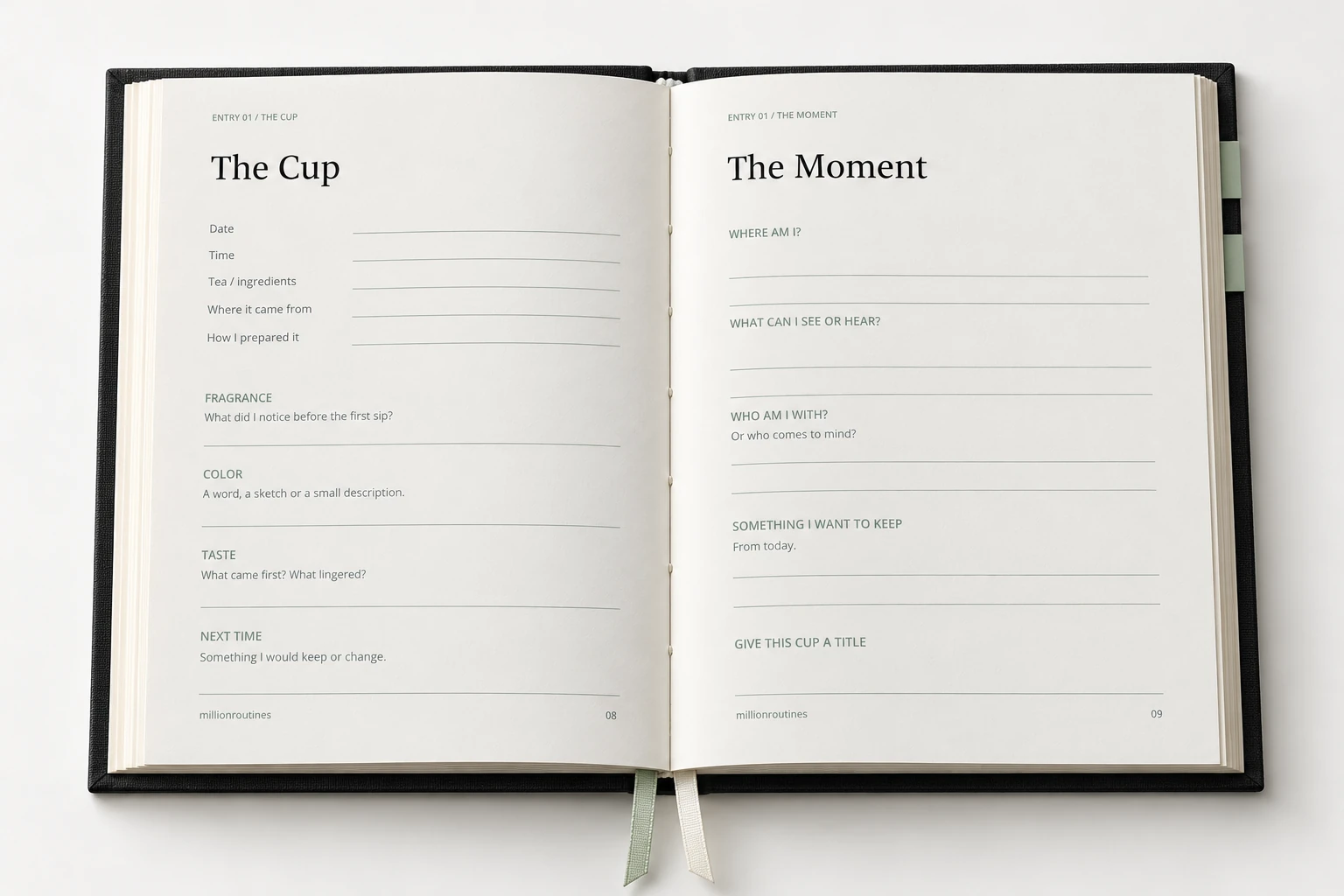
Charim borrows the invitation to notice and write. Fragrance, color and taste belong on one page; the place, company and a thought to keep belong on the other.
This is our new diary format. The historical manuals, poems and fellowship documents are its references, rather than an antique thirty-entry tea diary reproduced as a product.
The historical works and records here illuminate particular strands of Korean tea culture. Charim’s four-step home ritual is our contemporary adaptation.
Images & credits
The six distinct source photographs on this page are from the Academy of Korean Studies’ Encyclopedia of Korean Culture. Each selected image record is marked 공공누리 제1유형 / KOGL Type 1, requiring attribution. Titles and credits appear beside the images; photographs are resized for the web without adding or replacing document text.
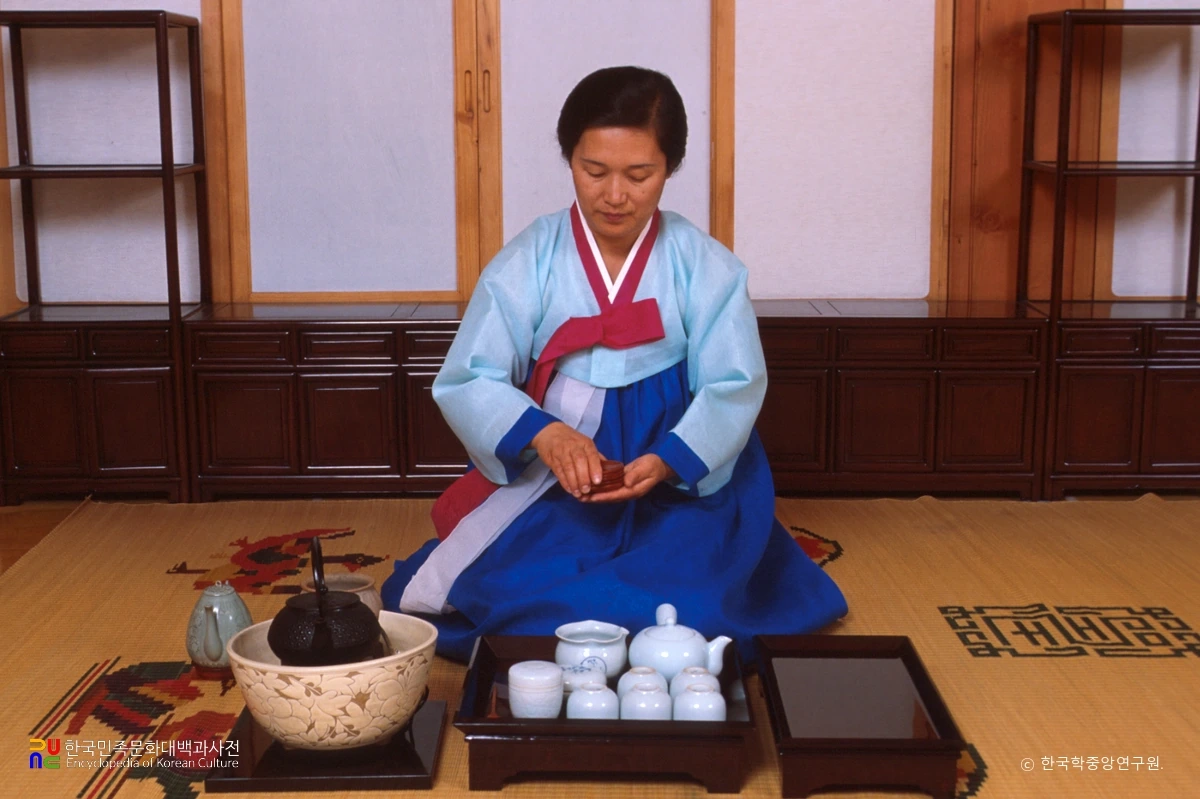
Photographed works: 다신전 and 동다송. Documentary photographs: 차잎 따는 광경 and 다도 / 잎차 다리기3. The image records do not specify the copies’ or photographs’ dates.
The dated 1981 KTV newsreel and 1987 Haeinsa photograph collection are provided as official archive links. Their dates identify those records, not the undated AKS photograph. The Haeinsa images are not reproduced here.