CHARIM / THE CUP PAIR · 찻잔을 가까이
A closer look.
A considered cup.
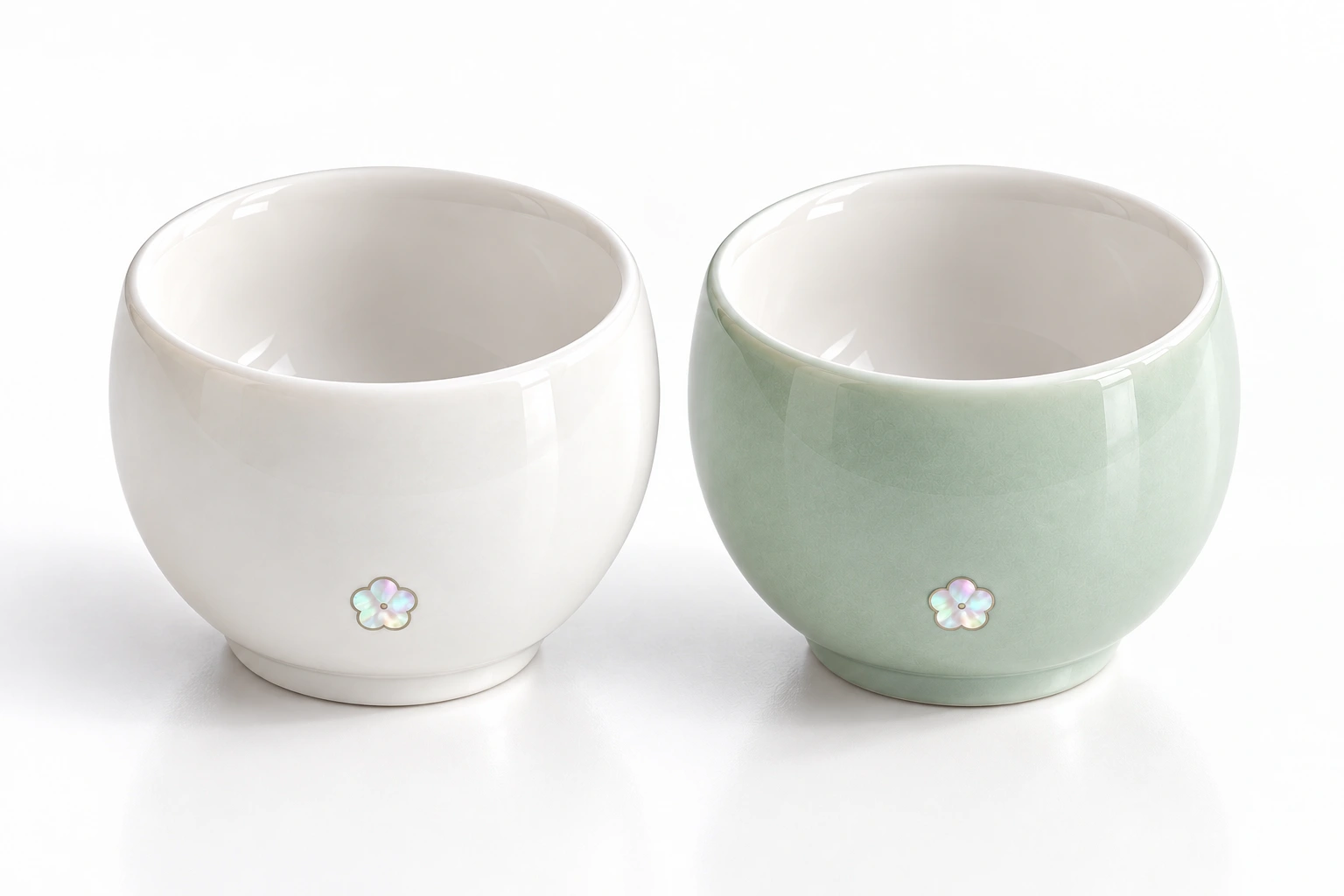
White, celadon and black.
One rounded form. A small flower.
DESIGN CONCEPT · MAKER & FINAL SPECIFICATIONS TO BE CONFIRMED
How the cups would be made ↓02 / DESIGN DETAIL
The pair
One shared silhouette, two colors.
The softly rounded, handleless form is intended to feel related in both finishes.
Design notes & specifications+
The softly rounded, handleless form is intended to feel related in both finishes. Capacity, dimensions, weight and wall thickness will be set through physical samples.
같은 형태에 백자색과 청자색을 담은 한 쌍입니다. 용량과 크기, 무게는 실물 샘플을 거쳐 정할 예정이에요.
- Palette
- Baekja-white & pale celadon
- Form
- Rounded, handleless; one related pair
- Surface
- Glossy glaze direction; pearl-like flower and a plain ceramic foot
- Current stage
- Digital concept images; physical prototypes to follow
The close-ups are crops of the same Bloom pair artwork, so every view follows one design. They show proposed details, rather than photographs of an existing manufactured cup.
FROM CLAY TO CUP · 제작 과정
The shape is drawn.
The making comes next.
This is the proposed development route for Charim.
The maker and workshop have not yet been appointed.
01 / 흙과 색을 고르기Choose the clay & test colors
Work with the ceramic maker to select a suitable clay body and make glaze test tiles.
Process details+
Work with the ceramic maker to select a suitable clay body and make glaze test tiles. White and celadon describe the visual direction; a clay recipe and glaze formulation have not been chosen.
Shape the first samples
Develop the rounded silhouette and compare sample forming methods, such as wheel throwing or a mold-based route.
Process details+
Develop the rounded silhouette and compare sample forming methods, such as wheel throwing or a mold-based route. Refine the rim, wall and small foot before choosing a repeatable approach.
Dry & prepare for firing
Dry the formed body and refine its edges.
Process details+
Dry the formed body and refine its edges. A preliminary, unglazed firing may be part of the chosen process; its use and schedule depend on the clay and maker’s method.
Glaze & fire
Apply the agreed glaze and fire it using a schedule suited to the body and glaze.
Process details+
Apply the agreed glaze and fire it using a schedule suited to the body and glaze. Heat transforms the ceramic and glaze; the final white and green tones must be assessed on real fired samples.
Develop the flower & pearl finish
Sample the pearl-like flower on the exterior while keeping the foot plain.
Process details+
Sample the pearl-like flower on the exterior while keeping the foot plain. The decoration may require its own application or firing stage. The process, materials and exact placement remain to be selected with the maker.
Refine the finished cup
Review how the cup sits, feels and drinks.
Process details+
Review how the cup sits, feels and drinks. Confirm dimensions, capacity, glaze and decorative durability, food-contact suitability and care instructions before approving production.
UNDERSTANDING THE MATERIALS
A color has
a process behind it.
Porcelain, glaze and celadon have their own material histories. These references help explain our design direction while our actual clay, glaze and kiln process are still being developed.
Ceramic materials & sources+
The ceramic body & glaze
Clay becomes ceramic through firing. Glaze forms a glassy surface layer. In production, the body, coating and firing schedule need to work together; our finished combination will be specified with the maker.
Ceramic materials · V&A Exploring Ceramics ↗Why celadon can look different
The Met describes Goryeo celadon’s color as a result of raw materials, glaze composition and kiln conditions. Our pale green is a contemporary color direction inspired by celadon, not a claim that these concept cups use a historical Goryeo recipe.
Goryeo celadon · The Metropolitan Museum of Art ↗The pearl detail is a separate finish
The small exterior flower is inspired by mother-of-pearl. Its ceramic application, durability and care need their own samples. A paper-box nacre print is not the production specification for this cup.
Read the Charim nacre design notes ↗WHEN REAL SAMPLES ARE READY
We’ll share the maker.
And the object in hand.
Final dimensions, capacity, weight, clay and glaze, maker and production location, decorative method and care instructions will be published once confirmed.