A proper hardcover
Matte white boards and warm-white pages. Binding to be sampled.
 millionroutinesKOREAN ROOTS. EVERYDAY RITUALS.Be first to know
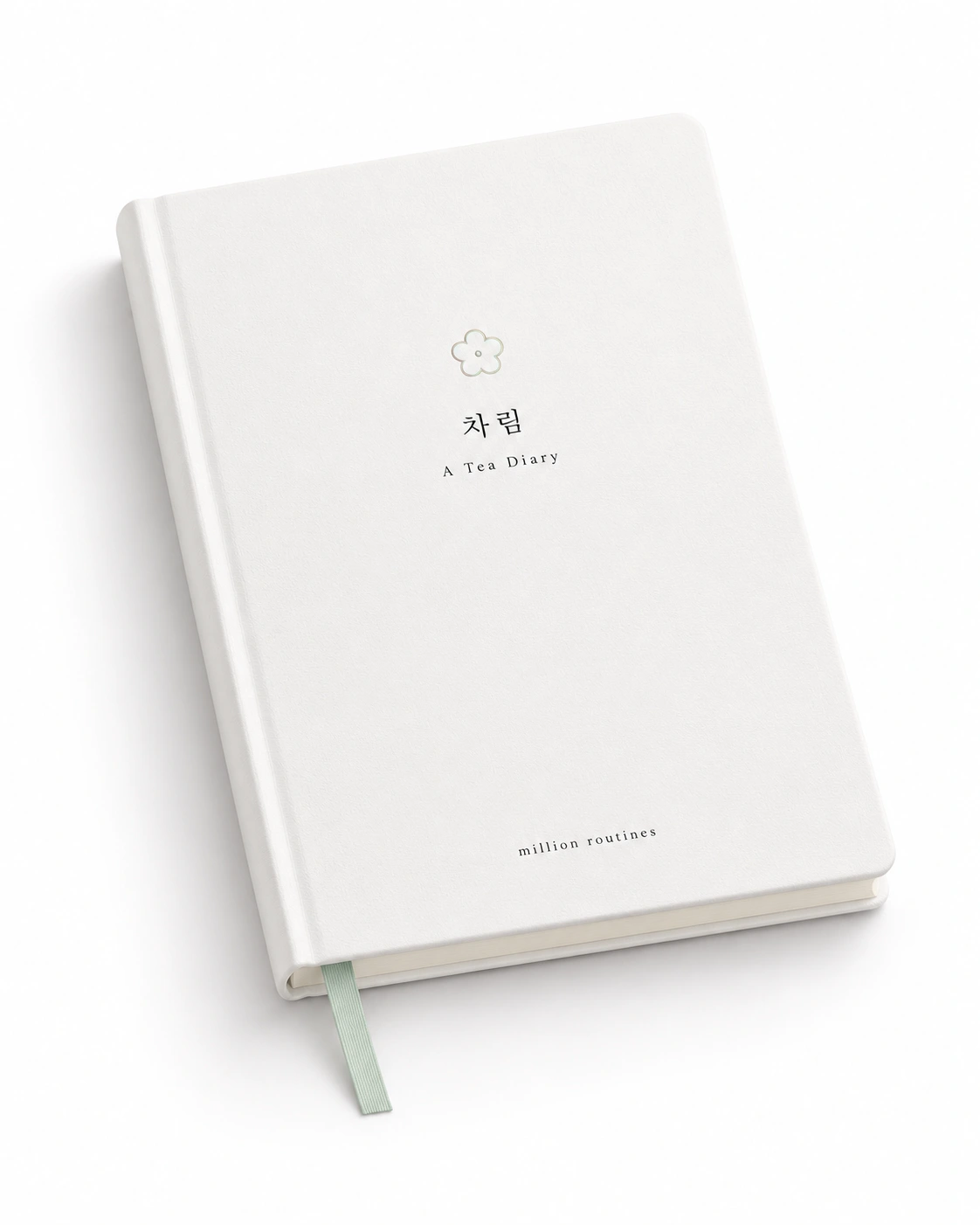
CHARIM / A SEPARATE COMPANION
차림 CHARIMKeep a little
of each cup.
An illustrated, undated diary for your tea and the moment around it.
Tea portraits, preparation notes and room for your own words.
ESTIMATED LAUNCH PRICE
Or +$28 with the ritual set.
Planned pricing, subject to final production costs. Shipping and any applicable taxes extra; confirmed before orders open.
Planned as a standalone diary or an add-on with Charim. Final production details and launch timing are to be confirmed.
A BOOK OF YOUR OWN · 나의 차 기록
White matte cover. A small pearl-like flower. One celadon ribbon.
Matte white boards and warm-white pages. Binding to be sampled.
A small pearlescent flower and restrained black lettering.
One celadon ribbon to mark your place.
A LITTLE KOREAN TEA KNOWLEDGE · 한국 전통 차 이야기
Cha includes leaf tea and drinks made from grains, fruit or roots. Start with the ingredient.
차 · 한국민족문화대백과사전 ↗Green tea and oxidized leaf teas begin with tea leaves. Their processing differs, so use the particular tea’s preparation directions.
Explore nokcha & balhyocha ↗Roasted barley becomes boricha; yuja preserve stirred into water becomes yujacha. These ingredients call for different preparation from a steeped leaf tea.
Explore barley & yuja ↗LANDSCAPE & HANDWORK · 땅과 손의 시간
Hadong’s traditional tea agricultural system in Hwagae-myeon was recognized by FAO as a Globally Important Agricultural Heritage System in 2017. Handpicking and locally transmitted cultivation and processing knowledge are part of its story.
Hadong tea heritage · FAO ↗TEA & WRITING · 차와 글
Choui’s Dongdasong, a late-Joseon text written in verse, discusses tea and its practice. It offers another way into Korean tea culture: through writing as well as drinking.
동다송 · 한국민족문화대백과사전 ↗A red fruit drink made with omija berries, known for a distinctive tartness. Dried-fruit infusions and syrup-based versions use different preparations.
A traditional drink made by simmering jujubes. The fruit brings its characteristic sweetness; the texture depends on how it is prepared and strained.
찻잎을 우리고, 곡물을 끓이고, 과실의 향을 나누는 시간.
한국의 차를 조금 더 가까이 알아보세요.
한국에서 ‘차’는 차나무의 잎으로 만든 음료뿐 아니라 곡물·과실·꽃·뿌리로 만든 여러 음료도 가리켜요. 재료를 알면 맛을 이해하기도, 어울리는 방법으로 준비하기도 쉬워집니다.
녹차와 산화 과정을 거친 잎차는 차나무의 잎에서 출발해요. 가공 방식이 다르므로 같은 온도와 시간으로 우리기보다, 선택한 차의 안내를 따라보세요.
볶은 보리로 만드는 보리차와 유자청을 물에 풀어 마시는 유자차도 익숙한 차의 모습이에요. 찻잎을 우리는 방식과는 준비 과정이 달라요.
하동 화개면의 전통 차 농업은 2017년 FAO 세계중요농업유산으로 인정받았어요. 손으로 잎을 따는 일과 지역에서 이어 온 재배·가공 지식도 한 잔의 배경이 됩니다.
조선 후기 초의가 지은 『동다송』은 차에 관한 생각과 실천을 운문으로 풀어낸 글이에요. 한국의 차 문화는 마시는 경험뿐 아니라, 차를 생각하고 글로 남기는 일과도 이어져 있습니다.
오미자 열매로 만드는 붉은빛의 차예요. 특유의 새콤한 맛을 느낄 수 있고, 말린 열매를 우린 것과 청을 물에 푼 것은 준비법이 달라요.
대추를 달여 만드는 전통 음료예요. 대추 특유의 단맛이 나며, 달이고 거르는 방법에 따라 농도와 질감이 달라집니다.
차림에서는 이 전통을 오늘의 일상에 맞게 풀어갑니다. 차를 고르고, 향을 느끼고, 한 잔의 기억을 적는 작은 시간으로 시작해 보세요.
A PICTURE FOR EACH STEP · 차를 마시는 순서
A contemporary everyday guide.
A little help beside your cup.
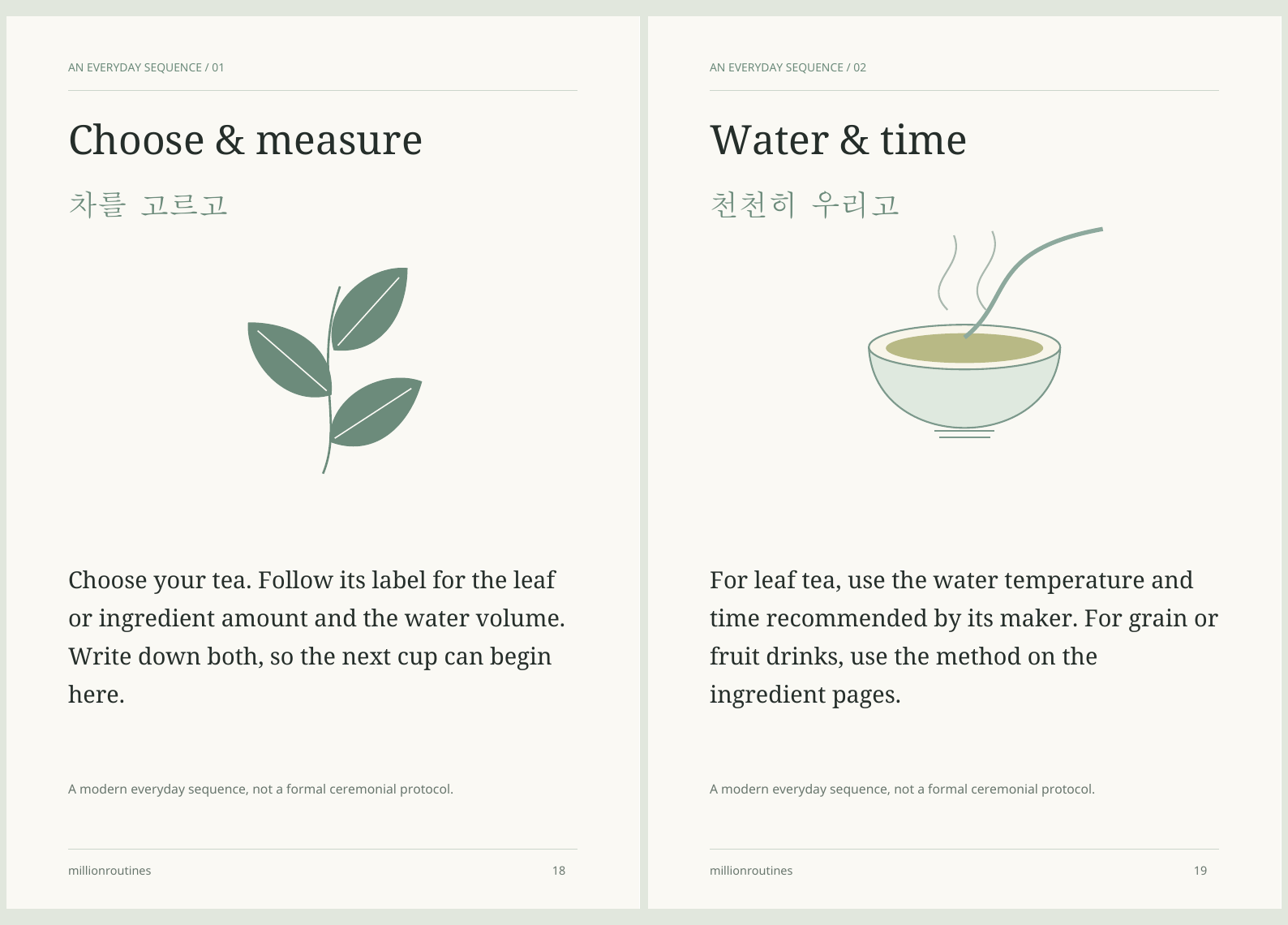
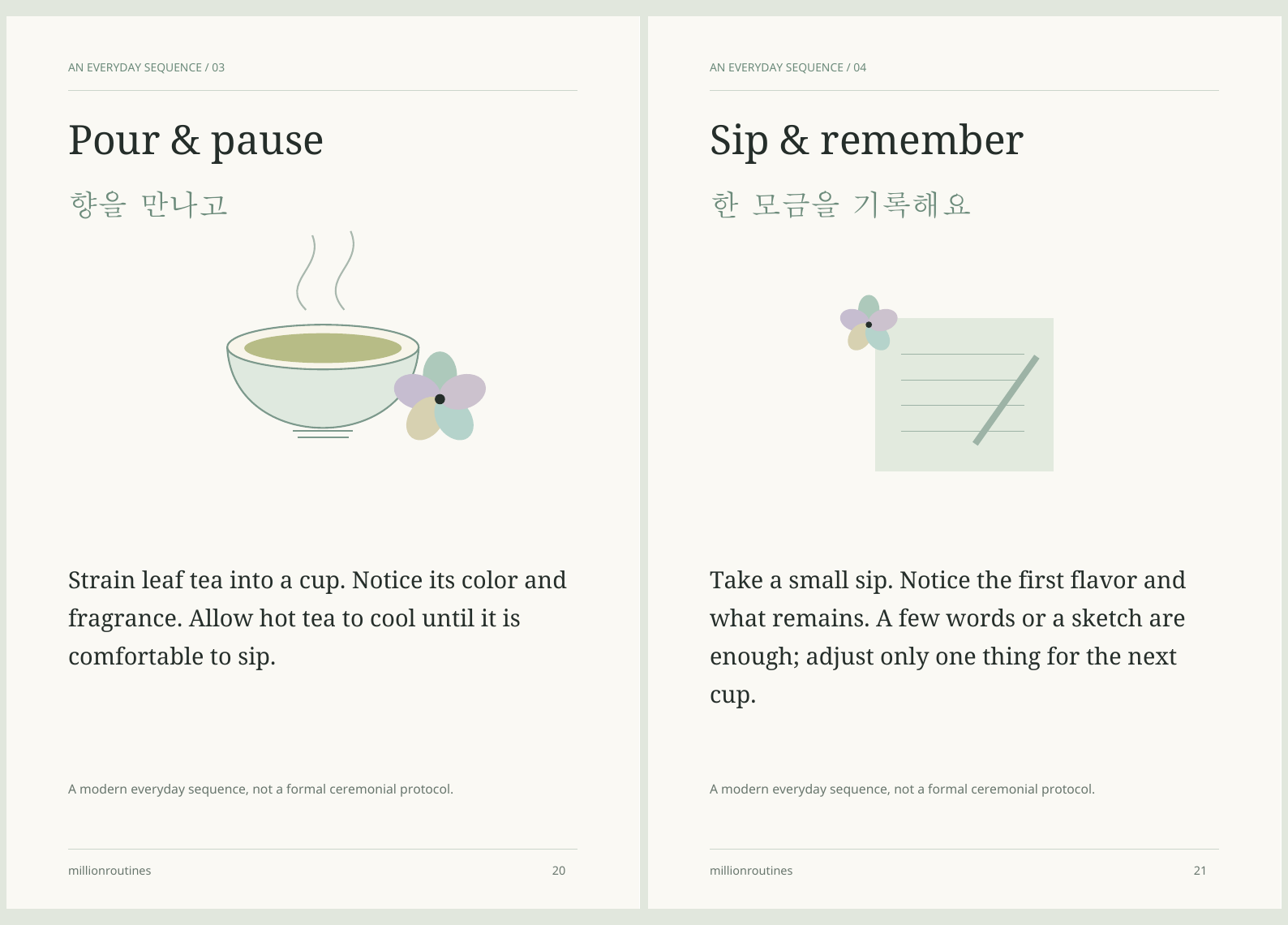
Leaf tea, simmered grains and stirred fruit preserves need different preparation. The guide points you to the appropriate tea portrait and the maker’s instructions. This sequence is our everyday interpretation, rather than a formal ceremonial protocol.
KEEPING THE MOMENT
A fragrance you recognize.
A view from the window.
Someone you would like to share a cup with.
You do not need to write a poem.
A few words can hold a moment.
Prepare your tea. Notice what is here.
Keep a little of it.
THE PAGES / SPACE FOR YOUR OWN WORDS
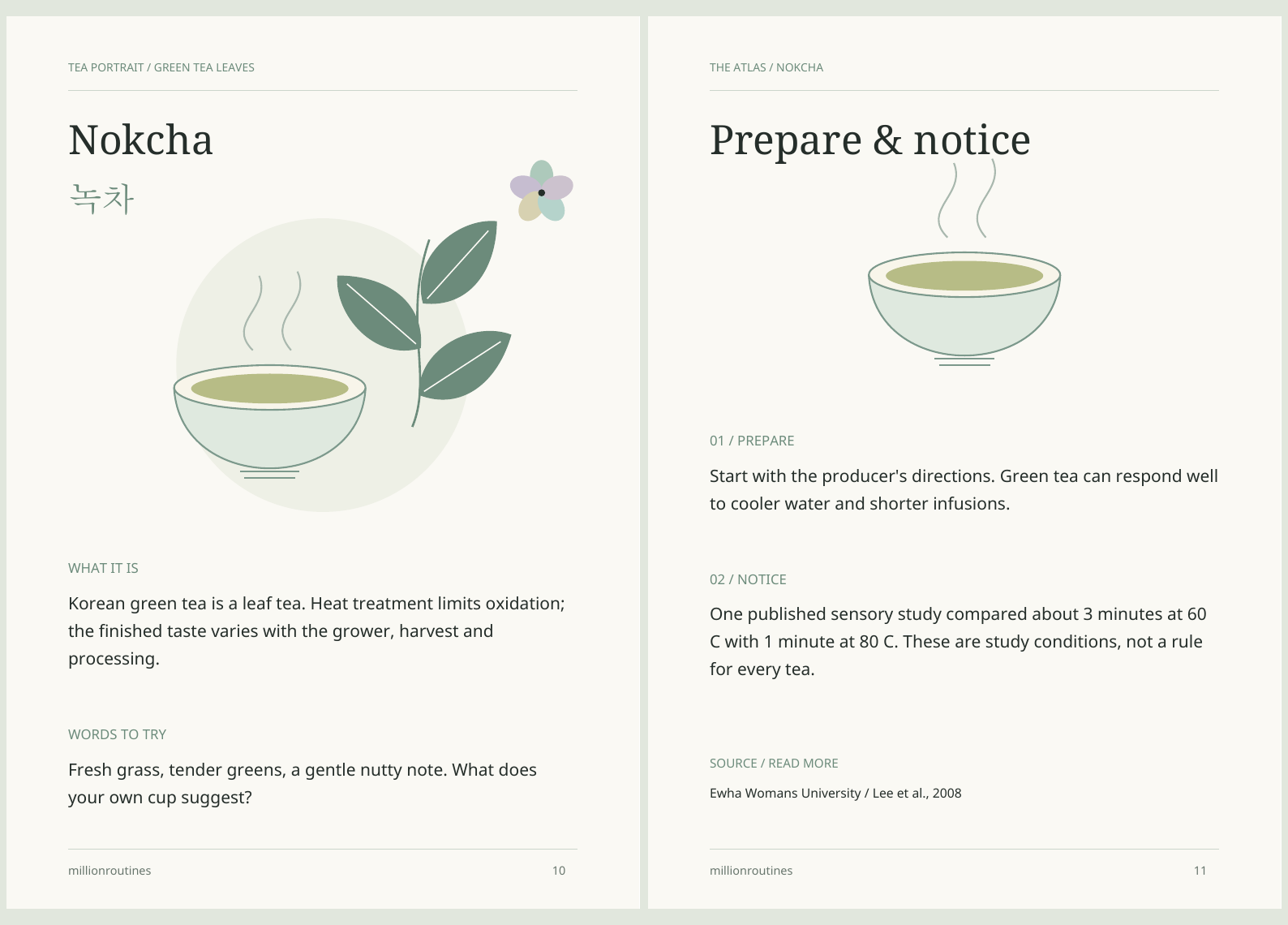
A botanical tea portrait beside practical preparation notes. Explore green tea, oxidized tea, roasted barley and yuja preserve drinks.
Actual layouts from the 96-page concept PDF. The physical binding and detachable leaves remain proposed features.
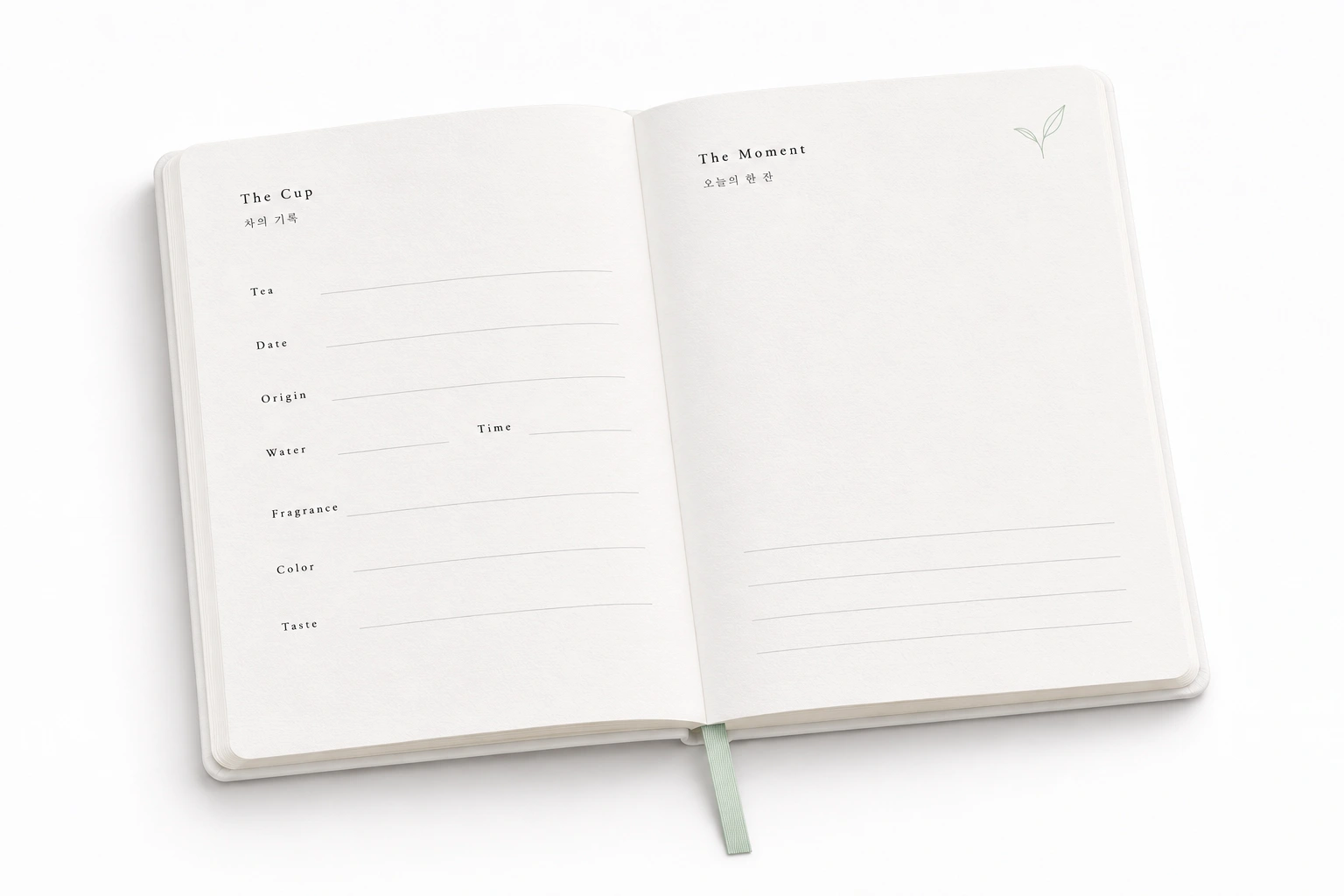
SMALL ENOUGH TO KEEP NEARBY
WHY A TEA DIARY?
A contemporary diary inspired by Korean tea poems,
correspondence and tea literature.
Daam Sicheop / Dasan Chodang
Jeong Yak-yong’s tea poetry and the landscape of Dasan Chodang inspire space for surroundings.
National Institute of Korean HistoryDasinjeon
Dasinjeon addresses fragrance, color and taste. Choui Uisun transcribed it from an earlier Chinese source; this diary’s prompts are a modern adaptation.
Encyclopedia of Korean CultureDasin-gye / 1818
The provisions connect tea with verse letters. Surviving copies are documented by the National Folk Museum.
National Folk Museum of KoreaThe 30-entry format, prompts and layouts are new designs. We have not established a historical Korean diary in this format. The notes use institutional descriptions and excerpts; they do not reproduce a historical manuscript.
Read about tea and verse letters · NIKHYOUR DIARY, YOUR TEA
A few tasting notes, a memory, or a page left open. Make it yours.
A WORD IS ENOUGH.
by millionroutines